
“Mother” by Pearl S. Buck
**post by nichan**
Pearl S. Buck, I think, is probably my favorite author. I’m not sure how many of her books I’ve read, but it’s been a lot. A whole lot. I stopped going to the library because they ran out of books of hers that I hadn’t yet plowed through…
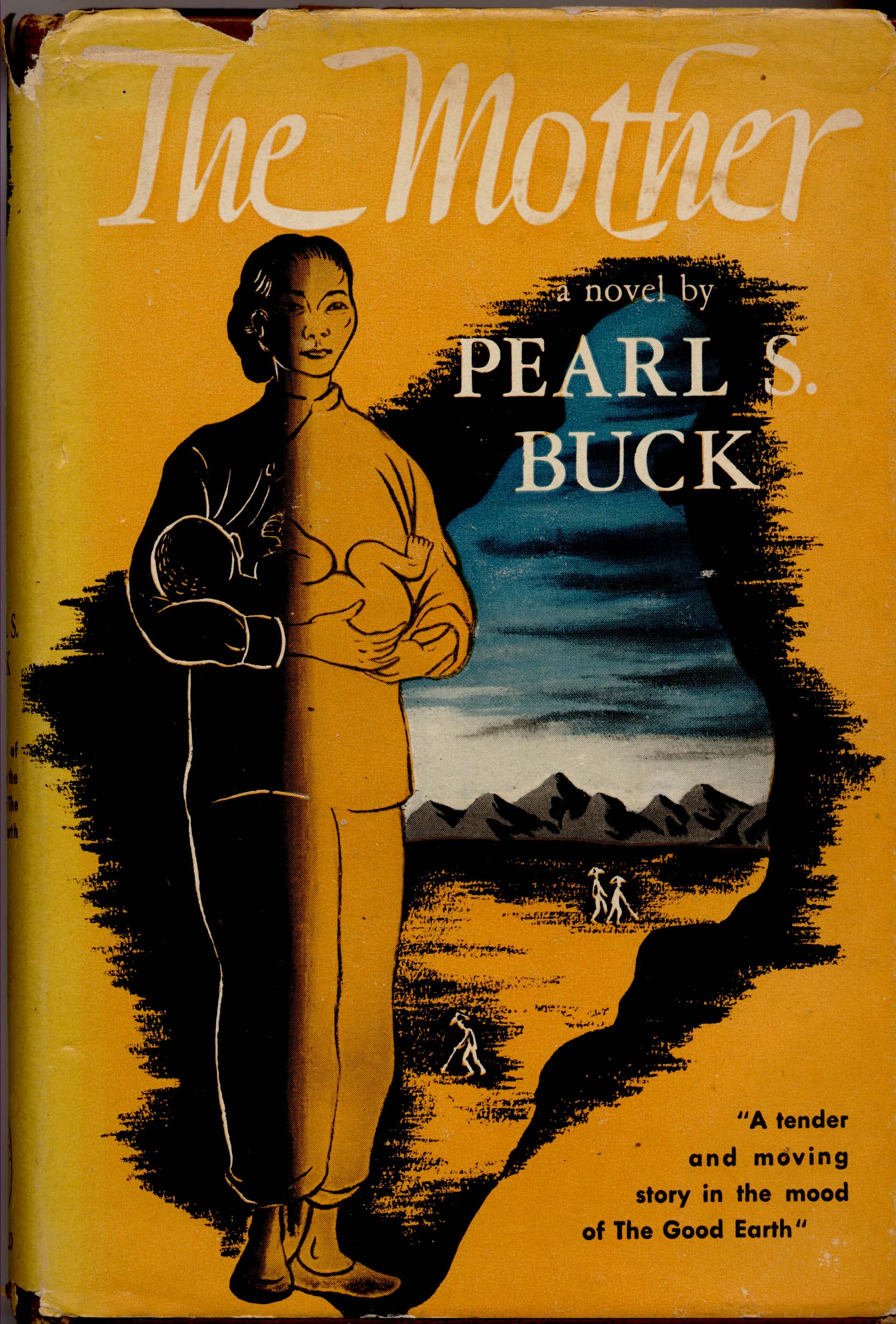 Anyway, Buck was born in the States, but grew up in China as the daughter of missionaries, and then wound back up in the States prior to the People’s Republic being founded. (Or something like that, anyway.) Because she spent her youth in a small Chinese village (or so I’ve gathered), most of her stories take place in what feels like her backyard. Every time I read about her various peasant families, I picture them living in the same little hamlet outside of the same little town. It becomes familiar and comfortable, if not a hint repetitive.
…But that’s not to say that every one of her stories is a carbon copy of the rest. She writes in an incredibly slow, dry, archaic manner that can either prove disastrous or miraculous. Through some sort of magic, she turns every book into an individual experience. It doesn’t translate well at all when she writes about white people, but it’s pretty cool when she writes about Chinese people. (She’s also written about other groups, but the Chinese and Caucasians are her two main groups.)
But the point here is “Mother”, which I just finished reading this afternoon. It’s the tale of an unnamed mother from the point in which she has a young son, daughter, one on the way, a husband, and a mother-in-law, and follows her all the way to the birth of her first grandson. She lives in a tiny Chinese hamlet, on a farm, in a little house, and every day she does this or that to get by. It’s really, really astonishingly plotless. There’s just not that much going on. Yet, somehow, it’s totally good. Not Buck’s best, but still really good.
The reviews for her books always comment about how she takes such complete foreign cultures and makes them familiar (These books were written in the early half of the 1900s, mind you.), and I think this is spectacularly true for “Mother”… The main character is a woman in a labor-intensive world, and like other stories that take place in labor-intensive worlds, she hasn’t got a lot of time to focus on anything but her work. She has children, but she doesn’t really register them. She’s got a mother-in-law to look after, but her mother-in-law is just another mouth to feed. She’s got neighbors around her, but she really only interacts with a few, and even then, she’s only got one that you’d really consider her friend. Her life is so focused on day-to-day survival that there’s little left for anything else. She sacrifices everything to toil, really. There’s no other way. …And like anything else I’ve ever read about a labor-intensive world, it’s sad to see how exhausting life used to be, and it’s liberating to think of how awesome life is now: In this woman’s world, every day was spent in work; in my world, I destroyed the entire afternoon sitting on my butt and reading!
There’s also the addition of watching how existence unfolds for this woman. She’s young, she has her whole life ahead of her, and everything is steady and calm. But then a plot twist comes and shakes things up, and in the mere matter of a year or so, the world becomes completely different for her, and she has to adapt quickly. The most fascinating part for me, though, was long after that year, when it comes time for her oldest son to marry. The immediate transition she makes from being the mother to the mother-in-law is just traumatic. She goes from a vibrant woman to an old and useless lady overnight, and the rapid deterioration of her as a character is utterly stunning. The conclusion is almost ridiculous in how it cements this strange balance between being filial to your mother, yet completely destroying a woman one generation removed from current importance.
I can’t exactly summarize the book because nothing really happened. There are so few plot points that if I were to say much, I’d give the whole thing away. If you’ve ever read a Pearl S. Buck book, then this would rate as a pretty good addition to the collection. If you’ve never read one of her books, then this is not the place to start. You have to get into her groove, and though “Mother” is certainly part of the groove, it’s not really the best entryway. Her writing takes some getting used to, and this book is too far into the style to be a great introduction.
…I’m currently re-reading for the trillionth time one of her other books, though. As soon as I get that one done, I’ll totally tell you which book you ought to start with. Yessiree.
 Asian Addicts Anonymous
The Mother is my first Pearl S Buck book and I’m loving it. The pace is slow which is OK because the story depicts life in a slower and more simple culture than the western one. Love that there are so may similarities to modern family stresses even though the lifestyle’s completely different! Can’t wait to get my hands on another of her books.
It is interesting how Pearl Buck can write this book in a western voice yet the Chinese people and places seem so vivid. The main character, the mother, is self absorbed and so analytical of her life that I sometimes felt she was the author of some of her own misfortune. She felt her greatest accomplishment was having children, especially her youngest son. After much misfortune and unhappiness the e=book ends with a grandson and she is overjoyed and sees this as some redemption for her own life and mishaps. I don’t know how old Ms Buck was when she left China but I think perhaps late teens, but I am struck by how much Chinese detail she has been able to incorporate into her Asian books, both through characters lives and feelings as well as life culture and lifestyle. A remarkable writer with great insight and patience with her writing. Thank you Pearl.